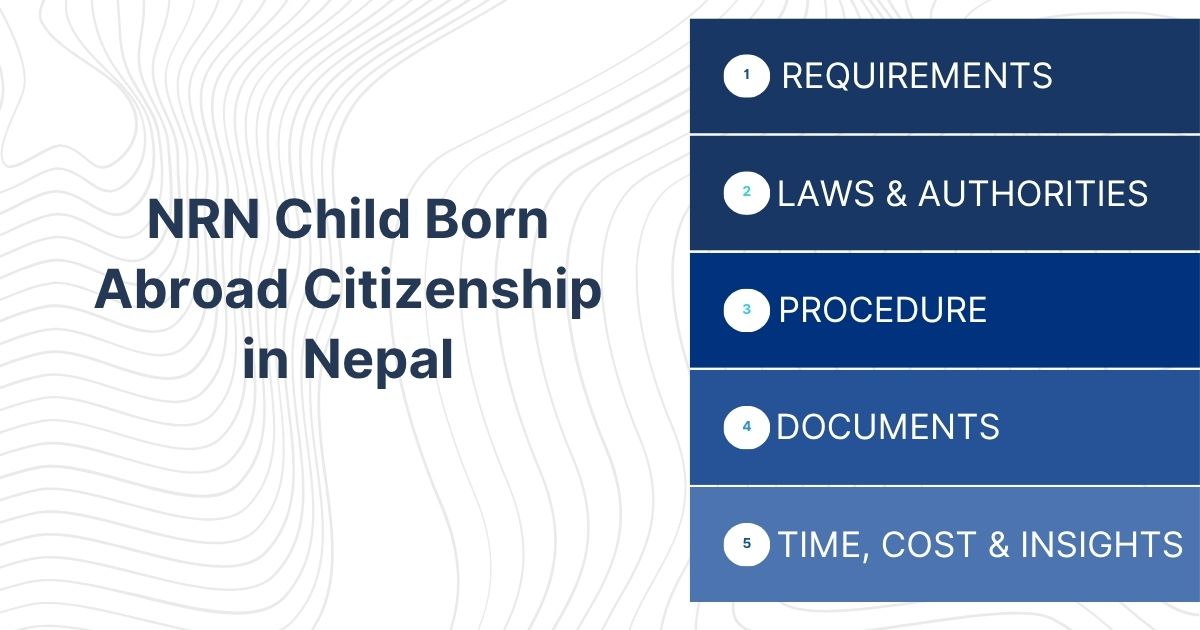
Who Are NRN Citizenship Holders?
Non-Resident Nepali (NRN) citizenship is a special legal status granted to Nepali-origin individuals living abroad. The Non-Resident Nepali Act, 2008 (2064 B.S.) established this framework, giving eligible individuals a unique identity tied to Nepal without requiring them to hold a Nepali passport.
NRN citizenship holders enjoy specific rights, privileges, and visa-related benefits in Nepal. However, many NRN cardholders remain confused about visa requirements, entry permissions, and legal obligations during their stay in Nepal.
This guide breaks down everything you need to know — from legal definitions to documents, step-by-step processes, and practical tips — so NRN citizenship holders can navigate Nepalese immigration law with confidence.
Understanding the Legal Framework for NRN Citizenship
The Non-Resident Nepali Act, 2008
The Non-Resident Nepali Act, 2008 is the primary legislation governing NRN status in Nepal. It was enacted to recognize and encourage the participation of Nepali diaspora in Nepal’s economic and social development.
Under Section 4 of this Act, a person of Nepali origin who has acquired foreign citizenship is eligible to apply for NRN status. This status grants them a Non-Resident Nepali Identity Card.
Constitutional and Immigration Framework
The Constitution of Nepal, 2015 (2072 B.S.) does not automatically grant citizenship rights to NRN cardholders. They are considered foreign nationals of Nepali origin, which means standard immigration laws under the Immigration Act, 1992 (2049 B.S.) and Immigration Rules, 1994 (2051 B.S.) still apply to their visa and entry requirements.
The Nepal Immigration Department under the Ministry of Home Affairs administers all visa-related matters for NRN citizenship holders visiting Nepal.
Visa Requirements for NRN Citizenship Holders Entering Nepal
Are NRN Cardholders Exempt from Visa Requirements?
This is one of the most commonly asked questions. The direct answer is: NRN cardholders are NOT completely exempt from visa requirements, but they receive significant benefits compared to regular foreign nationals.
Under the Non-Resident Nepali Regulation, 2009 (2066 B.S.), NRN identity card holders are entitled to:
- Visa-on-arrival privileges with reduced processing
- Extended stay duration compared to regular tourists
- Multiple-entry visa permissions
- Reduced or waived visa fees in certain categories
However, the type of visa required depends on the nationality of the NRN cardholder’s foreign passport, the purpose of their visit, and the duration of their intended stay.
Types of Visas Available to NRN Citizenship Holders
NRN cardholders can apply for the following categories of visas when visiting Nepal:
Visa TypePurposeMaximum DurationEntry TypeTourist VisaLeisure, family visitsUp to 150 days per yearMultiple EntryBusiness VisaTrade, investment, business meetingsUp to 1 yearMultiple EntryNon-Tourist VisaEmployment, research, project workVariesSingle/MultipleResidential VisaLong-term stay in NepalRenewable annuallyMultiple EntryStudy VisaAcademic enrollmentDuration of courseSingle/Multiple
NRN cardholders holding an NRN identity card may apply for a residential visa that allows them to stay in Nepal without frequent renewals and without the standard foreign national restrictions.
NRN Residential Visa: The Primary Visa Option
What Is the NRN Residential Visa?
The NRN Residential Visa is the most relevant visa category specifically designed for NRN identity card holders. It allows individuals of Nepali origin holding foreign citizenship to reside in Nepal for extended periods.
Under Rule 5 of the Non-Resident Nepali Regulation, 2009, NRN cardholders may apply for a residential visa through the Department of Immigration in Kathmandu.
Key features of the NRN Residential Visa include:
- Duration: Initially issued for two years, renewable
- Entry: Multiple-entry allowed
- Work Rights: Limited — additional permits required for employment
- Property Rights: NRN cardholders can own property in Nepal under existing laws
- Business Rights: Entitled to invest in Nepal under the Foreign Investment and Technology Transfer Act, 2019 (2075 B.S.)
Who Qualifies for the NRN Residential Visa?
To qualify, the applicant must:
- Hold a valid NRN Identity Card issued by the Non-Resident Nepali Association (NRNA) and approved by the Government of Nepal
- Hold a valid foreign passport
- Have Nepali origin — meaning they, their parents, or grandparents were previously Nepali citizens
- Not be engaged in activities that violate Nepalese national security interests
Step-by-Step Process to Obtain a Visa as an NRN Cardholder
Step 1: Obtain Your NRN Identity Card
Before applying for any NRN-specific visa benefit, you must hold a valid NRN Identity Card. Apply through the Non-Resident Nepali Association or the nearest Nepali Embassy/Consulate in your country of residence.
Required documents at this stage:
- Proof of Nepali origin (birth certificate, parents’ citizenship certificate)
- Valid foreign passport copy
- Proof of foreign residency
- Application form
Step 2: Choose the Correct Visa Category
Based on your purpose of visit, select the appropriate visa. NRN cardholders visiting for personal or business purposes should choose between the residential visa or tourist/business visa. Consult the Nepal Immigration Department’s official guidelines before submitting your application.
Step 3: Prepare Your Documents
Compile all required documents (see the Documents Required section below). Ensure all documents are current, properly attested, and translated into Nepali or English where necessary.
Step 4: Submit Application at the Point of Entry or Embassy
NRN cardholders may apply:
- At Tribhuvan International Airport (TIA) — Visa on Arrival counter
- At the Department of Immigration — Maitighar, Kathmandu
- At Nepali Embassies or Consulates abroad before travel
Step 5: Pay the Required Visa Fees
Visa fees depend on the visa type and duration. NRN cardholders may receive fee concessions as outlined in the Non-Resident Nepali Regulation. Always carry payment in US Dollars or equivalent convertible foreign currency for on-arrival processing.
Visa DurationStandard Tourist Fee (USD)NRN Concession15 days$30Waived/Reduced30 days$50Reduced90 days$125ReducedResidentialVariesSignificant Reduction
Step 6: Receive Visa and Comply with Reporting Requirements
Once the visa is issued, ensure you:
- Register at the District Administration Office if staying more than 30 days outside Kathmandu Valley
- Comply with all immigration reporting requirements
- Renew the visa before its expiry through the Department of Immigration
Documents Required for NRN Visa Application
Primary Identity Documents
The following documents are mandatory for NRN visa applications:
DocumentDetailsValid Foreign PassportMinimum 6 months validity requiredNRN Identity CardMust be valid and government-approvedProof of Nepali OriginCitizenship certificate, birth certificate of applicant or parentsRecent Passport-Size PhotosMinimum 2 photos (white background)Completed Visa Application FormAvailable at the immigration counter or embassy
Supporting Documents Based on Visa Category
For Residential Visa:
- Proof of address in Nepal (ownership deed or tenancy agreement)
- Financial solvency proof (bank statement)
- Police clearance certificate from country of residence
- Health insurance certificate (recommended)
For Business Visa:
- Letter of invitation from a Nepali registered company
- Company registration certificate of the Nepali entity
- Business plan or project outline
- Registration proof from the Office of Company Registrar if investing
For Study Visa:
- Admission letter from a recognized Nepali educational institution
- Academic certificates
- Proof of tuition payment
Rights and Restrictions of NRN Cardholders in Nepal
Rights Granted to NRN Cardholders
NRN cardholders enjoy several legally recognized rights in Nepal:
- Right to invest in Nepal under the Foreign Investment and Technology Transfer Act, 2019
- Right to own land and property — residential property of up to a limited area as per the Land Act, 2021 (2078 B.S.)
- Right to participate in economic activities
- Right to open bank accounts in Nepal in convertible foreign currency
- Right to obtain driving licenses valid in Nepal
- Priority in government investment promotion programs
Restrictions Applicable to NRN Cardholders
Despite the privileges, NRN cardholders remain subject to certain legal limitations:
- Cannot vote in Nepali elections
- Cannot hold government positions reserved for Nepali citizens
- Cannot acquire dual citizenship formally — NRN status is not equivalent to citizenship under Article 11 of the Constitution of Nepal, 2015
- Must comply with all visa conditions and immigration laws
- Subject to the Foreign Exchange Regulation Act, 2019 (2076 B.S.) for all financial transactions
- Employment requires a separate work permit from the Department of Labour
Common Legal Issues Faced by NRN Cardholders
Overstaying Visa Limits
Overstaying is a serious immigration violation under Section 22 of the Immigration Act, 1992. NRN cardholders who overstay their visa are subject to:
- Daily fines calculated in US Dollars
- Potential deportation
- Blacklisting from future entry
Always renew your visa at the Department of Immigration before the expiry date.
Property Ownership Disputes
Many NRN cardholders who purchase property in Nepal without proper legal due diligence face ownership disputes. Under the Land Act, 2021, NRN cardholders must ensure:
- Proper title registration at the Land Revenue Office
- Compliance with land ownership ceiling provisions
- Use of proper legal channels — always engage a licensed Nepali advocate
Tax Obligations in Nepal
NRN cardholders earning income from Nepal are subject to Income Tax Act, 2058 (2002 B.S.) provisions. Interest on bank deposits, rental income, dividends, and capital gains from property sales are all taxable.
The Inland Revenue Department has specific provisions for non-resident income. NRN cardholders should consult a certified tax professional to remain compliant.
NRN Visa vs. Regular Foreign National Visa: Key Differences
FeatureNRN CardholderRegular Foreign NationalVisa ProcessingExpeditedStandardVisa DurationExtended (up to 150 days/year tourist)Standard (90 days max tourist)Residential Visa EligibilityYesNoProperty OwnershipAllowed (limited)RestrictedInvestment RightsPrioritized under FITTA 2019Subject to standard FITTA rulesVisa FeesReduced/ConcessionStandard ratesWork RightsSeparate permit neededSeparate permit neededBank AccountForeign currency accounts allowedRestricted
Practical Tips for NRN Cardholders Visiting Nepal
Always Carry Both Your NRN Card and Foreign Passport
Immigration officers at Tribhuvan International Airport and border checkpoints will require both documents. Carrying only one may result in processing delays.
Renew Your NRN Card Before It Expires
The NRN Identity Card has a validity period. An expired card does not grant you NRN visa benefits. Renew it through the NRN Association or the nearest Nepali diplomatic mission.
Keep Copies of All Documents
Always maintain digital and physical copies of:
- Passport
- NRN Identity Card
- Visa approval documents
- Property deeds (if applicable)
- Tax clearance certificates
Engage a Licensed Nepalese Lawyer for Complex Matters
Property purchase, business registration, inheritance disputes, and long-term residency matters require expert legal counsel. Always engage an advocate registered with the Nepal Bar Association for reliable legal guidance.
Recent Legal Developments Affecting NRN Cardholders
Amendment Proposals to the NRN Act
The Government of Nepal has been actively discussing amendments to the Non-Resident Nepali Act, 2008, with proposals to:
- Streamline the NRN card renewal process
- Expand property ownership rights
- Introduce a long-term residential permit of up to 10 years
- Simplify business investment procedures for NRN cardholders
Digital Immigration System at TIA
Nepal’s Department of Immigration has introduced digital processing systems at Tribhuvan International Airport to reduce visa processing time. NRN cardholders can expect faster processing with proper documents.
Foreign Investment and Business Opportunities
The Investment Board Nepal and the Department of Industry regularly announce investment packages for NRN cardholders. Staying updated with these announcements helps NRN cardholders maximize their legal privileges.
Frequently Asked Questions (FAQs)
Q1. Can an NRN cardholder enter Nepal without a visa?
No, NRN cardholders cannot enter Nepal without a visa. They hold foreign passports and are subject to immigration laws. However, they receive significant visa benefits, including reduced fees, longer stay durations, and residential visa eligibility under the Non-Resident Nepali Act, 2008.
Q2. How long can an NRN cardholder stay in Nepal on a tourist visa?
NRN cardholders can stay up to 150 days per calendar year on tourist visa privileges. Standard tourists are limited to 90 days. The extended duration is a specific benefit granted under the Non-Resident Nepali Regulation, 2009, recognizing their Nepali origin and ties.
Q3. Can NRN cardholders work in Nepal?
NRN cardholders cannot work in Nepal without a separate work permit issued by the Department of Labour. Their visa status does not automatically authorize employment. They must apply through proper legal channels, complying with the Labour Act, 2017 (2074 B.S.) requirements.
Q4. What happens if an NRN cardholder overstays their visa in Nepal?
Overstaying results in daily fines, potential deportation, and possible blacklisting under the Immigration Act, 1992. NRN cardholders must renew visas before expiry at the Department of Immigration in Kathmandu. Consistent violations may result in cancellation of NRN card privileges permanently.
Q5. Can NRN cardholders buy property in Nepal?
Yes, NRN cardholders can own residential property in Nepal under limited conditions as per the Land Act, 2021. They must register property through the Land Revenue Office and comply with ownership ceiling rules. Legal assistance from a registered Nepali advocate is strongly recommended before any property transaction.
Q6. How do NRN cardholders apply for a residential visa in Nepal?
NRN cardholders apply for a residential visa at the Department of Immigration in Maitighar, Kathmandu. Required documents include a valid foreign passport, NRN identity card, proof of Nepali origin, proof of Nepal address, police clearance, and financial solvency documents. The visa is initially granted for two years.
Q7. Are NRN visa fees different from regular tourist visa fees?
Yes, NRN cardholders receive fee concessions compared to regular foreign nationals. The Non-Resident Nepali Regulation, 2009 provides for reduced or waived visa fees for NRN identity card holders. Exact fee structures should be confirmed with the Department of Immigration or the nearest Nepali Embassy.
Q8. Does NRN citizenship give the right to vote in Nepal?
No, NRN status does not grant voting rights in Nepal. NRN cardholders are recognized as foreign nationals of Nepali origin under the Constitution of Nepal, 2015. Political rights, including voting, are exclusively reserved for Nepali citizens holding Nepali citizenship certificates or passports under Article 11.
Conclusion: Navigating NRN Visa Requirements With Confidence
Understanding NRN citizenship holder visa requirements is essential for every Nepali-origin individual living abroad. The legal framework — rooted in the Non-Resident Nepali Act, 2008, the Immigration Act, 1992, and the Constitution of Nepal, 2015 — provides a structured pathway for NRN cardholders to maintain their connection with Nepal legally and beneficially.
The key takeaways are:
- Always hold a valid NRN Identity Card alongside your foreign passport
- Apply for the correct visa category based on your purpose of visit
- Take advantage of the NRN Residential Visa for long-term stays
- Comply with all immigration reporting requirements
- Engage qualified Nepali legal professionals for complex legal matters
Nepal continues to evolve its legal framework to attract and support its diaspora. Staying informed and legally compliant ensures that NRN cardholders can enjoy the full range of benefits their special status provides.
This article is intended for general legal information purposes only and does not constitute formal legal advice. Consult a licensed advocate registered with the Nepal Bar Association for advice specific to your individual circumstances.